
Insomnia, or difficulty sleeping, is one of the most common health concerns worldwide. It doesn’t simply refer to the inability to fall asleep. Insomnia can involve difficulty staying asleep, waking up too early, or waking up feeling unrefreshed despite adequate hours in bed.
In a busy city like Bangkok—where work pressure, long working hours, and lifestyle changes are common—insomnia affects both physical and mental health. Poor sleep can lead to reduced concentration, low energy, irritability, weakened immunity, and long-term health risks if untreated.
This article provides an easy-to-understand, medically accurate explanation of insomnia: what causes it, how to recognize the signs, and what treatment options exist.
What Is Insomnia?
Insomnia is a sleep disorder that affects the quality, timing, or duration of sleep. It can be short-term (acute) or long-term (chronic).
Acute Insomnia
Lasts a few days to a few weeks
Often triggered by stress, travel, or temporary lifestyle changes
Chronic Insomnia
Occurs at least 3 nights per week
Persists for more than 3 months
Often linked with medical or psychological factors
Insomnia is not just about “not trying hard enough to sleep.” It often has identifiable causes.
Common Symptoms of Insomnia
People with insomnia may experience:
Sleep-Related Symptoms
Difficulty falling asleep
Waking up frequently at night
Waking too early and unable to return to sleep
Restless or broken sleep
Feeling unrefreshed even after 7–8 hours in bed
Daytime Symptoms
Fatigue or low energy
Poor concentration
Mood changes or irritability
Reduced productivity
Increased anxiety or frustration
Headaches
Difficulty focusing on tasks
Over time, chronic insomnia affects the immune system, emotional stability, and overall physical health.
What Causes Insomnia?
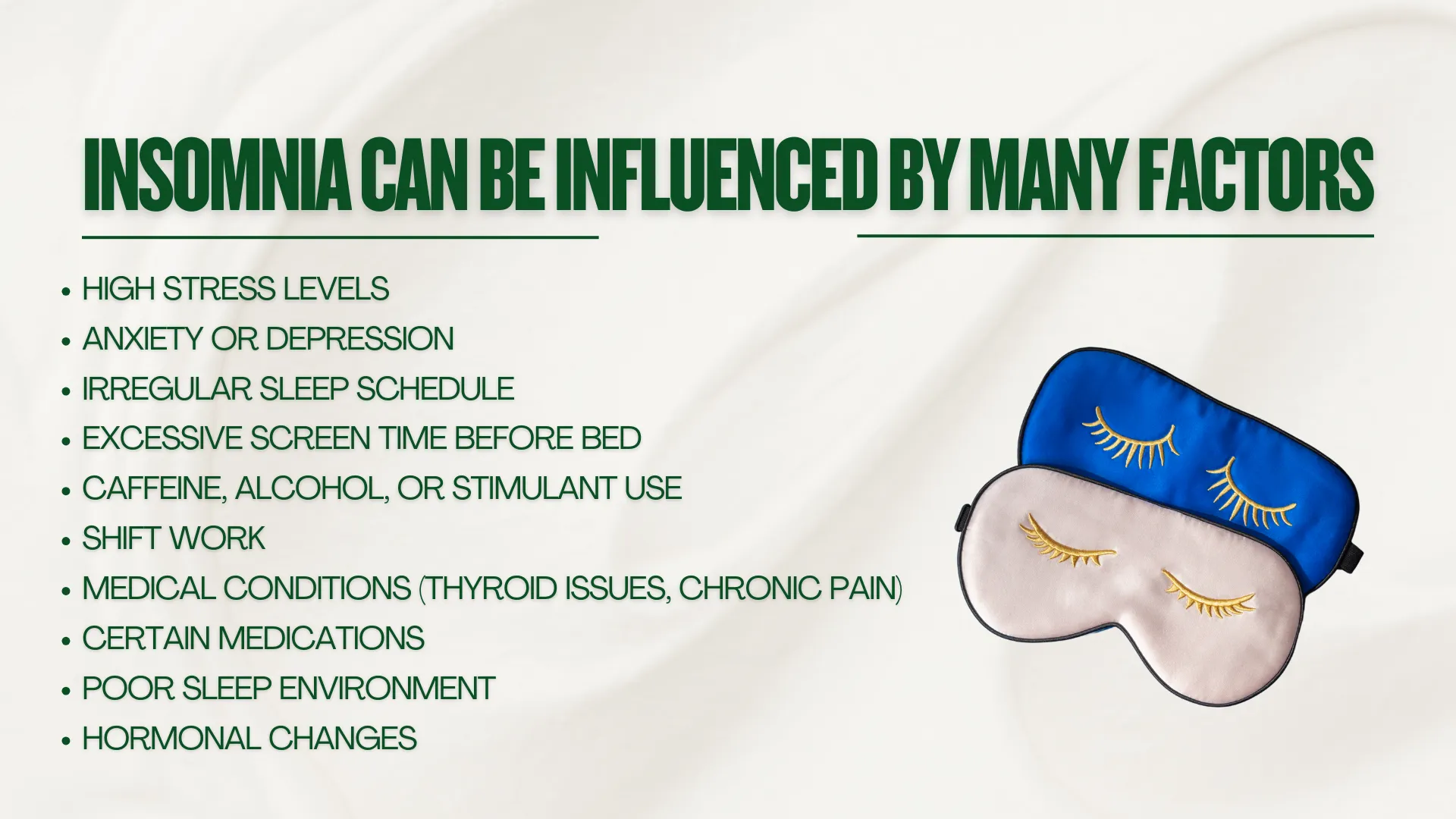
Insomnia can be caused by physical, psychological, and environmental factors.
1. Psychological Causes
Stress or excessive worrying
Anxiety disorders
Panic attacks
Depression
Work pressure or burnout
Trauma or major life changes
These factors are some of the leading contributors to chronic insomnia.
2. Medical Conditions
Thyroid disorders
Hormonal imbalance
Vitamin deficiencies (e.g., B12, D)
Chronic pain
Asthma or sleep-related breathing issues
Acid reflux
Menopause
3. Lifestyle & Environmental Causes
Irregular sleep patterns
Frequent use of screens before bed
Caffeine or stimulant consumption
Eating heavy meals late at night
Shift work or long working hours
Noisy or bright environment
4. Medication-Related Causes
Certain medications—such as steroids, stimulants, or antidepressants—may disrupt sleep.
Insomnia vs. Normal Poor Sleep – What’s the Difference?
It is normal to sometimes struggle with sleep, especially during stressful periods.
However, insomnia is different:
| Normal Poor Sleep | Insomnia |
|---|---|
| Happens occasionally | Happens regularly |
| Sleep returns to normal within a few days | Lasts weeks or months |
| Caused by temporary external factors | May involve medical or psychological causes |
| Still feels rested some days | Constant fatigue or daytime impairment |
If sleep problems last longer than two weeks or disrupt daily life, an assessment is recommended.
How Insomnia Affects Health
Chronic insomnia can influence:
Physical Health
Increased risk of heart disease
Weak immune system
Hormonal imbalance
Higher inflammation
Weight gain or difficulty losing weight
Mental Health
Anxiety or panic attacks
Depression or low mood
Irritability
Poor concentration
Increased stress sensitivity
Cognitive Function
Memory problems
Slow reaction time
Reduced productivity
Difficulty making decisions
Sleep is not just rest—it is a biological necessity.
How Insomnia Is Diagnosed
Detecting the underlying cause is essential for proper treatment. Diagnosis usually involves:
1. GP Consultation
A GP reviews:
Sleep history
Daily routines
Medical conditions
Medications
Stress levels
Sometimes a physical examination or blood tests may be recommended to check for thyroid issues, anemia, vitamin deficiencies, or hormonal imbalance.
2. Mental Health Assessment
Anxiety, depression, or unresolved stress can significantly impact sleep. Identifying these factors helps tailor the treatment plan.
3. Sleep Pattern Review
Patients may be asked about:
Bedtime routines
Screen usage
Snoring or breathing issues
Nighttime awakenings
Work schedule
4. Psychiatric Consultation (If Needed)
A psychiatrist can help diagnose:
Anxiety-related insomnia
Mood disorders
Stress-related conditions
Panic disorder affecting sleep
Evidence-Based Treatment Options for Insomnia
1. Cognitive Behavioural Therapy for Insomnia (CBT-I)
The gold standard treatment for chronic insomnia. Helps with:
Changing unhelpful sleep habits
Managing racing thoughts
Reducing anxiety around sleep
Developing a healthy sleep routine
2. Sleep Hygiene Improvements
Helpful adjustments include:
Consistent bedtime and wake time
Avoiding caffeine after afternoon
Reducing screen time before bed
Creating a dark, quiet sleeping environment
Light stretching or relaxation
3. Treatment of Underlying Medical Conditions
Addressing:
Thyroid issues
Vitamin deficiencies
Hormonal imbalance
Chronic pain
Breathing problems
4. Medication (If Appropriate)
Short-term medication may be considered in select cases but should be used under medical supervision to avoid dependency.
5. Counselling or Mental Health Support
When insomnia is linked to stress, trauma, or emotional strain, counselling helps address the root causes.
Insomnia in Bangkok – City Lifestyle Factors
Bangkok’s fast-paced environment contributes to sleep problems for many residents.
Common Bangkok-Specific Triggers
Long commutes
Extended work hours
Frequent screen use
Coffee culture
Work-related stress
Nightlife and social commitments
Noise from urban living
Urban lifestyles can disrupt natural sleep rhythms, especially for expats adjusting to new routines and cultures.
When to Seek Help for Insomnia
You should consider speaking with a healthcare professional if:
Difficulty sleeping lasts longer than 2 weeks
You experience severe fatigue during the day
Anxiety or stress affects sleep
You rely on caffeine or alcohol to stay awake or fall asleep
Sleep problems affect your work or studies
You wake up feeling unrefreshed regularly
You experience panic-like symptoms at night
A GP or mental health specialist can help determine the underlying cause and recommend the best approach.

Doctor’s Profile
Dr. Donna Robinson, Medical Director and British GP, has more than 20 years of experience treating physical and mental health conditions in Bangkok. She provides compassionate and thorough evaluation for patients struggling with sleep problems and related disorders.
Dr. Pui, our psychiatrist, specializes in sleep disorders connected to anxiety, depression, and stress. She offers comprehensive assessments and targeted treatment plans to help patients restore healthy sleep patterns. Together, both doctors provide a holistic, patient-centered approach to insomnia management.

Final Thoughts
Insomnia can significantly impact health and well-being, but it is treatable. Understanding your sleep patterns, identifying triggers, and addressing both physical and emotional factors can lead to meaningful improvement. Whether the cause is stress, lifestyle, or a medical condition, early evaluation helps restore healthy sleep.
Frequently Asked Questions (FAQs)
How many hours of sleep do adults need?
Most adults need 7–9 hours of sleep. However, quality is just as important as duration.
Is insomnia dangerous?
Insomnia itself is not dangerous, but chronic sleep deprivation can affect physical and mental health over time.
Can anxiety cause insomnia?
Yes. Anxiety and overthinking are among the most common contributors to difficulty sleeping.
Do sleeping pills help?
Sleeping pills may provide short-term relief but are not recommended as a long-term solution unless medically supervised.